
“The estate in Hobrechtsfelde was named in honor of James Hobrecht, the ‘father’ of Berlin’s city estates. The estate is one of over 50 former Berlin city estates. The estates surrounding Berlin were responsible for sewage-based agriculture and produced agricultural goods for the region and the nearby metropolis. The connection between city and countryside, circular economic practices, and the capacity for change characterize the more than 150-year history of the city estates. The granary in Hobrechtsfelde exemplifies this history. It is a distinctive place that is mindful of its rich past and is being further developed by dedicated people with curiosity, openness, and courage.”
Katrin Stary, Managing Director of Berliner Stadtgüter GmbH
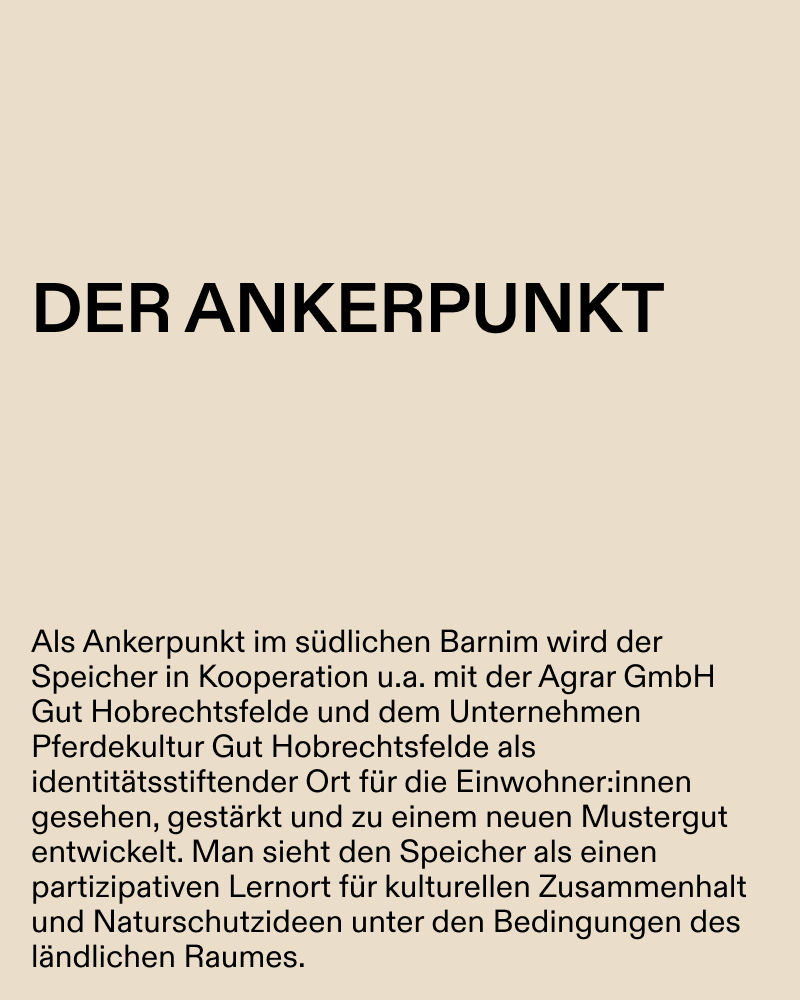
into a new future. The building is not a traditional museum, not merely an event venue, and not an ordinary restaurant or café. It is a hybrid, an open space that is constantly evolving. The Speicher is not “finished,” and that is precisely what makes it so exciting. It sees itself as a space in flux. Not all floors have been developed yet—a deliberate choice, as this leaves room for ideas, projects, and experiments. Step by step, new uses are emerging, such as studios, offices for social startups, workshops, and exhibition spaces.
Plans include artist studios and workshops that create space for creative production, offices and spaces for social startups and initiatives, rotating exhibitions by international and local artists, a library, and areas for pop-up dining and innovative projects. In this way, the Speicher is gradually becoming a multifunctional cultural and community center that strengthens the region and extends its influence far beyond Barnim. The Speicher’s wide-ranging program engages with both tradition and modernity.
By examining the fading practices of rural agriculture and the food industry alongside a cosmopolitan society, the aim is to pave the way for the acceptance of a homeland that is capable of change. The preservation and transformation of the Hobrechtsfelde estate stands in and of itself as a symbol of this capacity for development.
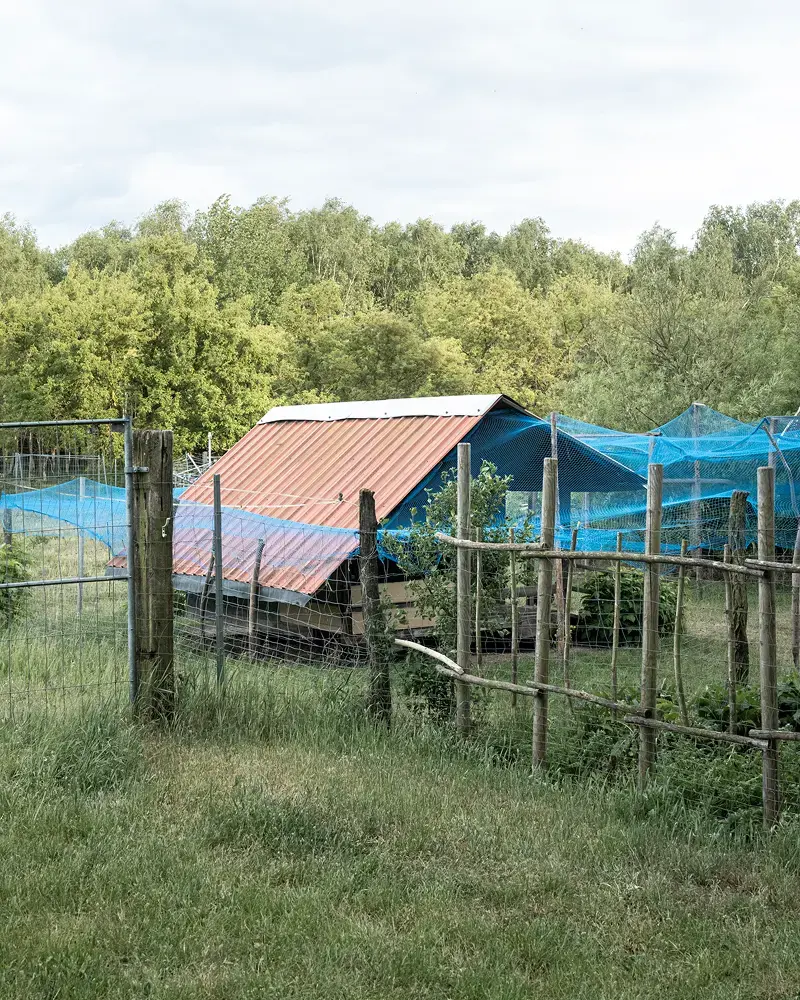
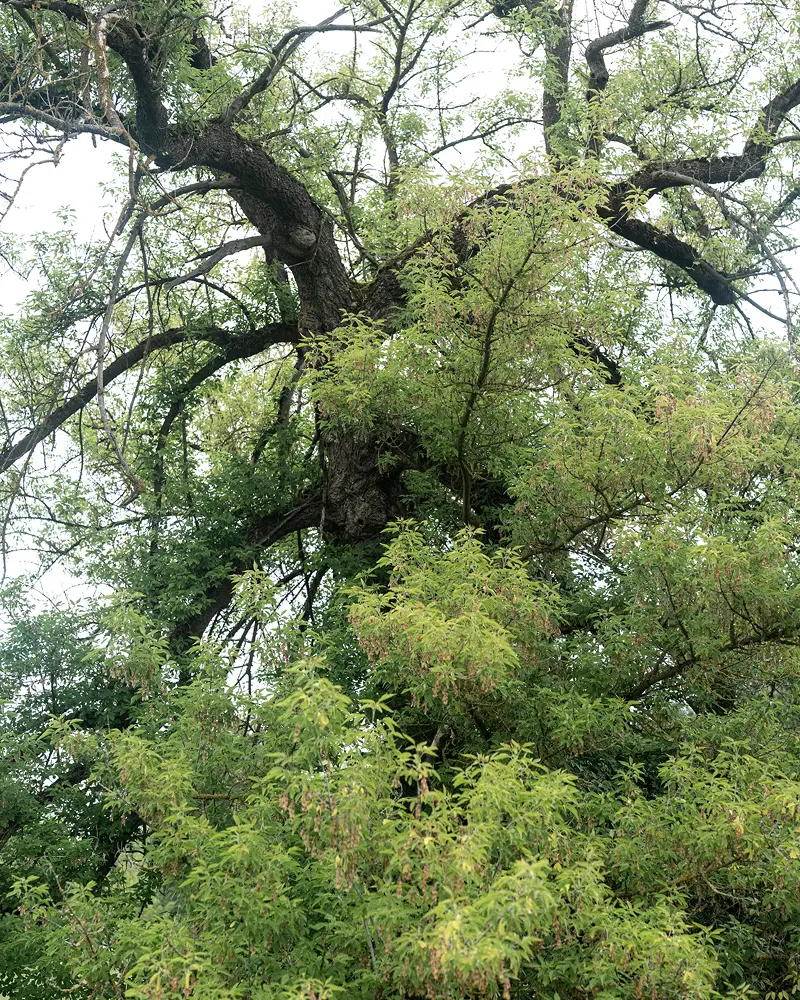
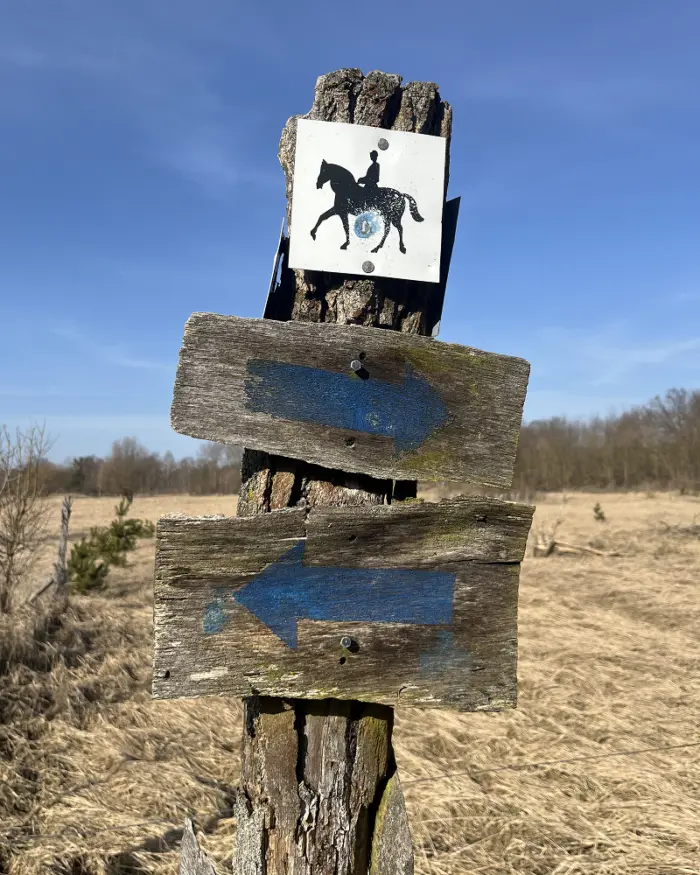
At the heart of this is a modern and forward-looking vision of the rural landscape, grounded in a long history and an incredible process of transformation—from a sewage-irrigated field to a protected landscape area boasting impressive biodiversity.
“The estate in Hobrechtsfelde was named in honor of James Hobrecht, the ‘father’ of Berlin’s city estates. The estate is one of over 50 former Berlin city estates. The estates surrounding Berlin were responsible for sewage-based agriculture and produced agricultural goods for the region and the nearby metropolis. The connection between city and countryside, circular economic practices, and the capacity for change characterize the more than 150-year history of the city estates. The granary in Hobrechtsfelde exemplifies this history. It is a distinctive place that is mindful of its rich past and is being further developed by dedicated people with curiosity, openness, and courage.”
Katrin Stary, Managing Director of Berliner Stadtgüter GmbH
into a new future. The building is not a traditional museum, not merely an event venue, and not an ordinary restaurant or café. It is a hybrid, an open space that is constantly evolving. The Speicher is not “finished,” and that is precisely what makes it so exciting. It sees itself as a space in flux. Not all floors have been developed yet—a deliberate choice, as this leaves room for ideas, projects, and experiments. Step by step, new uses are emerging, such as studios, offices for social startups, workshops, and exhibition spaces.
Plans include artist studios and workshops that create space for creative production, offices and spaces for social startups and initiatives, rotating exhibitions by international and local artists, a library, and areas for pop-up dining and innovative projects. In this way, the Speicher is gradually becoming a multifunctional cultural and community center that strengthens the region and extends its influence far beyond Barnim. The Speicher’s wide-ranging program engages with both tradition and modernity.
By examining the fading practices of rural agriculture and the food industry alongside a cosmopolitan society, the aim is to pave the way for the acceptance of a homeland that is capable of change. The preservation and transformation of the Hobrechtsfelde estate stands in and of itself as a symbol of this capacity for development.
At the heart of this is a modern and forward-looking vision of the rural landscape, grounded in a long history and an incredible process of transformation—from a sewage-irrigated field to a protected landscape area boasting impressive biodiversity.
Get in touch
More information
Accessibility
Kontaktiere uns
Weitere Informationen
Barrierefreiheit
Interner Bereich